
Blog • Family Matters
Selling Your Snellville Home During a Serious Illness, Without Adding Stress

When a diagnosis changes everything, the house can go from the place you feel safest to one more thing on a list that’s already too long. Appointments, treatments, insurance calls, and on top of it all, a mortgage, a yard, and repairs that keep waiting.
If you or someone you love is facing a serious illness in Snellville, this guide is for you. It won’t tell you what to do with your home. It will give you a calm, step-by-step way to decide, so you stay in control while your energy goes where it matters most: your health and your family.
You’re Not the Only One Carrying This
Illness is hard on a household budget, even with good insurance. The KFF Health Care Debt Survey found that about 41% of U.S. adults have some form of debt from medical or dental bills, for themselves or a family member.
That number doesn’t make your situation easier, but it should tell you something important: needing to rethink your finances after a diagnosis is common, and it’s nothing to feel ashamed of.

Step 1: Protect Your Income First
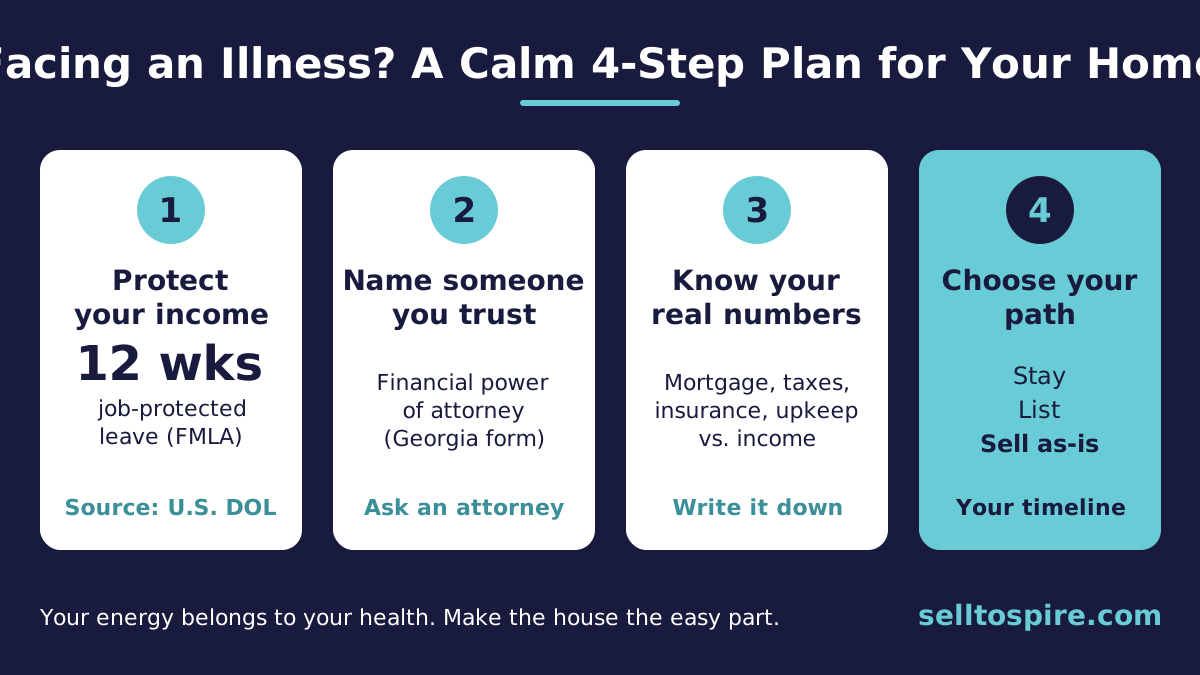
Before making any decision about the house, look at the paycheck that pays for it. If you work for a covered employer, the federal Family and Medical Leave Act lets eligible employees take up to 12 workweeks of unpaid, job-protected leave in a 12-month period for their own serious health condition, according to the U.S. Department of Labor. Employers may let you use paid sick or vacation time during that leave.
Knowing your job is protected buys time, and time is what makes every other decision calmer.
Step 2: Put the Right Paperwork in Place
This is the step families most often wish they’d done sooner. If treatment leaves you unable to handle paperwork for a while, someone you trust needs the legal authority to act for you, including signing documents related to the house.
Georgia has a statutory financial power of attorney form under its Uniform Power of Attorney Act. Emory University School of Law publishes a copy of the Georgia statutory form you can review. Because the rules for signing and witnessing matter, sit down with a Georgia attorney to complete it properly. A financial power of attorney doesn’t cover health care decisions, which use separate documents.

Step 3: Know Your Real Numbers
Make a simple list of what the house costs you every month: mortgage, property taxes, insurance, utilities, and upkeep. Then list what’s coming in during treatment. Seeing it on paper often makes the right answer obvious.
Don’t forget the costs that are easy to overlook: a roof or HVAC system near the end of its life, a homeowners insurance renewal, or the cost of hiring someone for lawn care and cleaning while you recover. These add up, and they’re part of the real cost of keeping the house right now.
If you’re already behind on payments, don’t wait. Our guide to dealing with financial issues walks through your options, and our article on surviving a financial storm shares practical next steps.
A note on taxes
Normally, you need to have owned and lived in your home for two of the last five years to exclude up to $250,000 of gain ($500,000 for most married couples) when you sell. But IRS Publication 523 includes an exception: if the main reason for the sale is health, you may qualify for a partial exclusion even if you haven’t met the two-year rule. A CPA can tell you exactly how this applies to you.
Step 4: Choose the Path That Fits Your Energy
There’s no single right answer. Here’s an honest look at your options.
Stay and adapt
If the home works for you and the budget holds, staying close to familiar people and places can be a real comfort. Consider a few small changes, like moving the bedroom downstairs or arranging lawn care, to make daily life easier.
List with an agent
A well-kept, updated home can bring a strong price on the open market. But listing usually means repairs, decluttering, showings on short notice, and waiting on a buyer’s financing. That’s a lot to manage during treatment.
Sell as-is, on your timeline
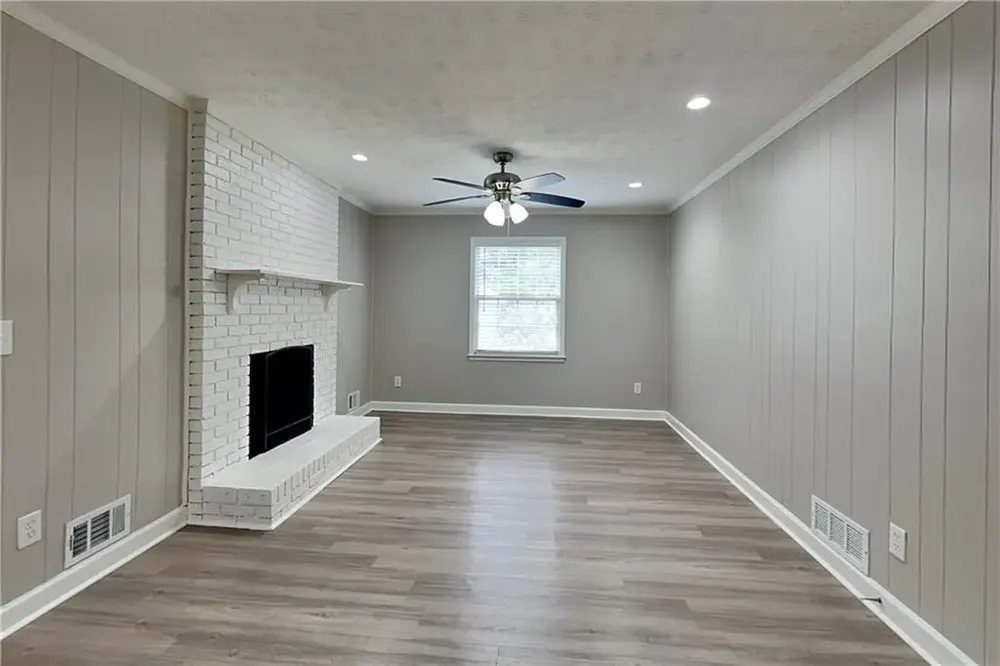
For many Snellville families, the biggest relief is simply removing tasks from the list. When you sell as-is to Spire Home Buyers, there’s nothing to fix, clean, or stage, and no strangers walking through your home on treatment days.
How Selling to Spire Works
- A short, private conversation about the house and what you need. We can talk with you or the person you’ve named to act for you.
- A same-day offer. No repairs, no showings, no open houses.
- You choose the closing date. As soon as 7 days, or weeks or months out if you need time to plan the move.
- Take what matters, leave the rest. You don’t have to empty the house.
We guarantee to close on time at the agreed-upon price. We don’t rely on bank financing, so an appraisal can’t derail the sale at the last minute.

“Micah gave sincere advice, guided us through the entire process with discretion and respect, making a difficult situation much less daunting for my father.”
FAQ
Can I sell my house in Snellville while I’m going through treatment?
Yes. A direct sale can be handled with very little of your time: a short conversation, a simple contract, and a closing date you choose. If you’ve named someone under a financial power of attorney, they can usually handle the paperwork for you.
Will selling my house because of illness affect my taxes?
It might. IRS rules allow a partial home sale exclusion when the main reason for selling is health, even if you haven’t lived there two full years. Talk with a CPA about your specific situation before you sell.
Do I need to make repairs before selling my house in Snellville?
No. Spire buys houses as-is, in any condition. You don’t need to repair, clean, or stage anything before closing.
You Don’t Have to Figure This Out Alone
Your energy belongs to your health and the people you love. If the house has become one more weight to carry, a short, no-pressure conversation can give you a real number and a plan you control. Visit our Snellville home buying page, get your guaranteed cash offer, or call 470-570-7021.
Thinking About Selling?
Get a fair, no-obligation cash offer on your house — often within 24 hours.
Prefer to talk now? Call 470-570-7021.
Get Your Free Cash Offer
No Fees • No Obligation • No Pressure