
Blog • Probate
Inherited a House With Your Siblings in Suwanee? Buyouts, Quitclaim Deeds and Selling Together
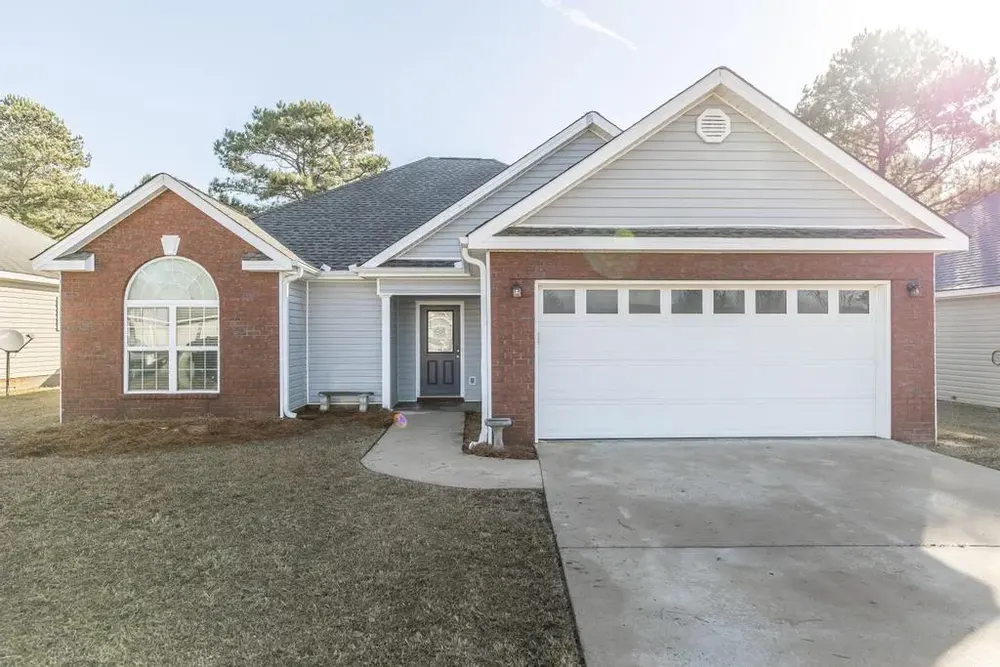
Mom and Dad left the house to all of you. That felt simple when it was written down. Now there are three or four names on one home, and everyone has a different idea of what should happen next.
One sibling wants to keep it. One needs the money now. One lives out of state and just wants it handled. And somebody has been mowing the lawn for months without a thank-you.
If you’ve inherited a house in Suwanee or anywhere in Gwinnett County with your brothers and sisters, this guide walks through the three paths families usually take, the paperwork that comes with each, and how to keep the relationships intact along the way.
First, Find Out Who Actually Owns the House
Before anyone talks about selling or buying out, get clear on where the title stands today. That usually depends on how your parent left things:
- There was a will and an estate is open. The executor named in the will usually manages the house during probate, and can often sell it as part of settling the estate.
- There was no will. Georgia law decides who the heirs are, and an administrator may need to be appointed by the probate court.
- Nothing has been done yet. If years pass and nobody opens an estate, the house can become what’s called heirs property: owned by several relatives at once, with no clear record of who holds what.
That last situation is more common than people think, and it gets harder to untangle with each generation. The Georgia Heirs Property Law Center offers free legal services to families working to clear title on inherited land.
This is the step where a short consult with a Georgia probate or real estate attorney pays for itself. They can tell you who needs to sign, and in what order.

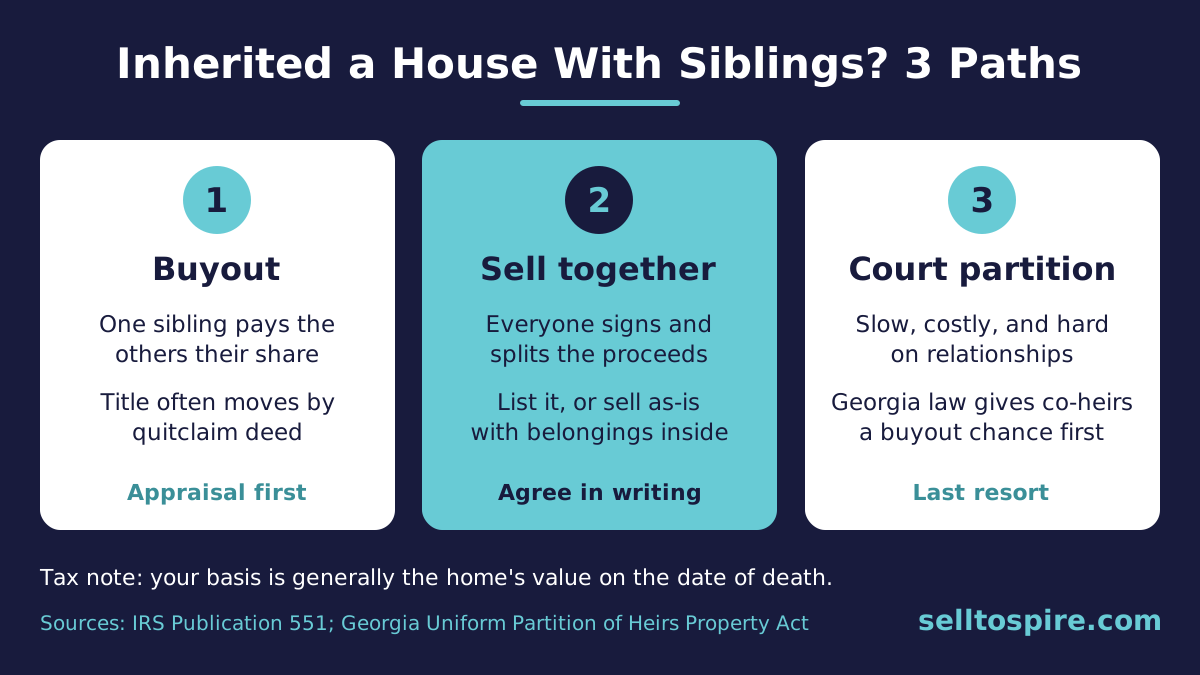
Path 1: One Sibling Buys the Others Out
If one of you wants to keep the house, a buyout is often the cleanest answer. In plain terms:
- Agree on a value. A professional appraisal keeps the number fair and takes emotion out of it.
- Subtract what’s owed. If there’s a mortgage or other liens, those come off the top before the equity is split.
- Pay each sibling their share. The buyer usually needs cash or a new loan in their own name to do this.
- Transfer the title. The selling siblings sign their interest over, often with a quitclaim deed.
A quitclaim deed transfers whatever ownership interest the signer has, without promising anything about the title itself. It’s a common tool between family members, but it isn’t always the right one. Depending on whether the estate is still open, the executor may need to deed the house instead. Have an attorney prepare it and record it properly with the county.
Where buyouts get stuck: the sibling who wants to keep the house can’t qualify for a loan big enough to pay everyone else. If that’s your family, it’s better to know early than six months in.
Path 2: Sell the House Together and Split the Proceeds
When nobody wants to live there, selling and dividing the money is usually the fairest outcome. Everyone who holds title (or the executor, if the estate is open) agrees on a price and signs.
The hard part isn’t the paperwork. It’s agreeing on how to sell:
- Listing it can bring a higher price, but someone has to manage repairs, a clean-out, and months of showings. That job usually falls on whoever lives closest.
- Selling it as-is skips all of that. The house sells in its current condition, belongings and all, on a closing date the family picks together.
Many inherited homes we see in Suwanee were loved for decades but haven’t been updated in years. If the living room still looks like the day your parents moved in, a retail sale usually means a lot of work first.

A tip that saves families arguments: decide in writing, before you sell, who pays for what while the house sits empty. Taxes, insurance, utilities and lawn care add up fast, and it’s easy for one sibling to quietly carry those costs and resent it later.
Path 3: Court Partition, the Last Resort
If siblings truly can’t agree, any co-owner can ask a court to divide the property or order it sold. This is called a partition action. It’s slow, it’s expensive, and it can permanently damage family relationships.
Georgia added protections for families here. Under the Uniform Partition of Heirs Property Act, adopted in Georgia in 2012, the court generally orders an appraisal and gives the other co-owners a chance to buy out the sibling who asked for the sale before the property goes to market. Georgia Appleseed’s heirs property resources explain how this works for families in plain language.
Even so, most families are far better off reaching an agreement before it gets to court.

What About Taxes?
Here’s some good news most heirs don’t know. According to IRS Publication 551, your cost basis in inherited property is generally its fair market value on the date of death, not what your parents originally paid. The IRS also confirms that inheritances themselves are generally not taxable income to the person receiving them.
So if your parents bought the house decades ago for a fraction of today’s value and you sell soon after inheriting, the taxable gain may be small. Every family’s situation is different, so confirm the details with a CPA before you sell.
Keeping the Family Together Through It
The house matters. The people matter more. A few things that make the process smoother:
- Talk early, and talk together. A group call where everyone hears the same information prevents a lot of “but you told me” moments.
- Put agreements in writing. Who’s paying the bills, who’s handling the clean-out, and how the money will be split.
- Take the keepsakes first. Give everyone time to choose photos, furniture and heirlooms before any sale date is set.
- Get a real number. Arguments often come from guessing. A written offer gives everyone the same starting point.
If you’d like to read more, our guide to selling a house you inherited covers the basics, and families in nearby Lilburn may find our post on selling inherited property in Lilburn useful too. You can also learn more on our inherited house page.
How Spire Works With Families Who Inherit
When siblings decide to sell, Spire Home Buyers keeps it simple and transparent for everyone involved:
- One conversation, with everyone invited. We’re glad to talk with the whole family at once so nobody is left out.
- A same-day written offer, guaranteed to close on time at the agreed price.
- No repairs, no clean-out, no showings. Take what matters and leave the rest.
- A closing date that works for the family, in as little as 7 days or later if the estate needs time.

FAQ
Can one sibling sell an inherited house without the others?
Generally, no. Every co-owner, or the executor acting for an open estate, needs to sign to sell the whole property. A Georgia attorney can confirm who needs to sign in your situation.
What is a quitclaim deed, and do we need one?
A quitclaim deed transfers whatever ownership interest the signer holds, without guaranteeing the title. Siblings often use one in a buyout, but the right document depends on whether the estate is open, so have an attorney prepare it.
Do you buy inherited houses in Suwanee that still have belongings inside?
Yes. Spire buys inherited homes in Suwanee as-is. Your family can take the keepsakes and leave the rest, and we handle what’s left after closing.
One Number Everyone Can Agree On
You don’t have to settle every family question in one conversation. Start with a clear, written offer everyone can see. Visit our Suwanee home buying page, get your guaranteed cash offer, or call 470-570-7021 for a calm, no-pressure conversation.
Thinking About Selling?
Get a fair, no-obligation cash offer on your house — often within 24 hours.
Prefer to talk now? Call 470-570-7021.
Get Your Free Cash Offer
No Fees • No Obligation • No Pressure