Blog • Foreclosure
Foreclosure Prevention Options in Georgia: 9 Ways to Stop Foreclosure
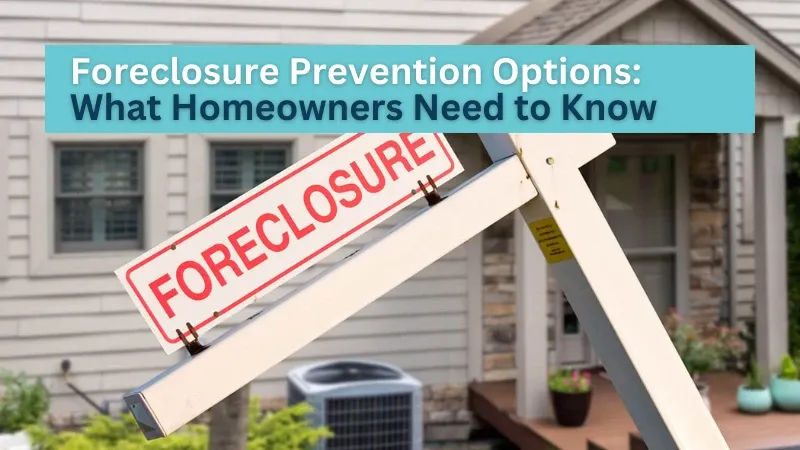
Short answer: If you are behind on your mortgage in Georgia, you can often stop foreclosure by catching up (reinstatement), changing the loan (forbearance, repayment plan, or modification), filing bankruptcy, or selling the house before the sale date. The key is to act early, because Georgia’s process moves fast once the lender sends a notice.
This guide walks through how foreclosure works in Georgia, nine ways to stop it, and how to tell which one fits your situation. We are a home-buying company, not a law firm, so this is general information and not legal advice. If you are facing a sale date, talk to a Georgia foreclosure attorney or a HUD-approved housing counselor too.
How Foreclosure Works in Georgia
Georgia is a non-judicial foreclosure state. That means the lender usually does not need to go to court. The loan paperwork gives the lender the power to sell the house if you do not pay. Here is the usual order of events:
- You miss payments. Most servicers start calling and mailing letters within the first month.
- About 120 days behind. Under federal rules, a servicer generally cannot start the foreclosure process until you are more than 120 days past due.
- Notice of sale. The lender must send you written notice at least 30 days before the sale. The sale must also be advertised in the county’s legal newspaper once a week for four weeks.
- The sale. The house is sold on the courthouse steps on the first Tuesday of the month. In Gwinnett County, that is the Gwinnett Justice and Administration Center in Lawrenceville. In Houston County, it is the courthouse in Perry.
- After the sale. Georgia does not give homeowners a right to buy the house back after the sale, so once the gavel falls, your options are very limited.
The most important number is 30. Once the notice arrives, you have a few weeks, not a few months. The first Tuesday of the month is your deadline, and anything that needs to be done must be done before that day.
9 Ways to Stop Foreclosure in Georgia
1. Reinstate the loan
Reinstatement means paying everything you owe to catch up: missed payments, late fees, and some legal costs. Ask your servicer for a written reinstatement quote. This works if you have a lump sum available, such as from savings, family, or a tax refund.
2. Ask for forbearance
Forbearance is a temporary pause or reduction in payments. It can bridge a short problem like a job gap or a medical bill. You still owe the missed money later, so ask exactly how it will be repaid.
3. Set up a repayment plan
A repayment plan spreads your missed payments over several months, added on top of your regular payment. It works best if your income has already recovered.
4. Apply for a loan modification
A modification changes the terms of your loan, such as the interest rate or the length of the loan, to lower your payment. Federal rules generally require servicers to review a complete loss-mitigation application, and they usually cannot hold the sale while it is being reviewed if you submit it more than 37 days before the sale date. Send everything in early, keep copies, and ask for confirmation in writing.
5. Look at government loan programs
If your loan is backed by the FHA, VA, or USDA, there may be extra options, such as partial claims that move missed payments to the back of the loan. Ask your servicer what is available for your loan type.
6. File bankruptcy
A bankruptcy filing triggers an automatic stay that pauses the foreclosure. Chapter 13 can let you repay missed payments over time. It is a serious step with long-term credit effects, so talk to a bankruptcy attorney first. See our guide on selling a house during bankruptcy.
7. Do a short sale
If you owe more than the house is worth, the lender may agree to accept less than the full balance. A short sale needs lender approval, takes time, and may leave you owing part of the debt. It is not always fast enough to beat a sale date.
8. Give a deed in lieu of foreclosure
With a deed in lieu, you sign the house over to the lender to avoid the foreclosure process. It can limit the damage compared with a foreclosure, but the lender has to agree, and you give up any equity.
9. Sell the house before the sale date
If you have equity, or even if you are close to even, selling can be the cleanest way out. The loan is paid from the sale proceeds at closing, the foreclosure stops, and you keep whatever is left. Because a sale is on your schedule, it can protect your credit better than a foreclosure and give you cash for your next step.
You can sell with an agent or to a cash buyer. An agent may get a higher price for a house in good shape, but it takes time, repairs, and showings, and the buyer’s loan can fall through. A cash buyer like Spire can close in as little as 7 days with no repairs, no fees, and no commissions. When your sale date is close, that speed can matter more than the last few thousand dollars.
Which Option Fits Your Situation?
- You are only a month or two behind and have a plan to catch up: start with reinstatement, a repayment plan, or forbearance.
- Your income dropped for good: a loan modification or a sale makes more sense than a short-term fix.
- You owe less than the house is worth: selling usually leaves you with cash. For example, if the house is worth $300,000 and you owe $240,000, a sale can pay the loan off and leave money for you.
- You owe more than the house is worth: ask about a short sale, a deed in lieu, or bankruptcy, and talk to an attorney.
- The sale date is within a few weeks: you need to move now. Call your servicer, call a housing counselor, and get a cash offer so you know where you stand.
How a Cash Sale Can Stop Foreclosure
When you sell to Spire Home Buyers, the sale closes through a licensed Georgia title company or closing attorney. They pay off your mortgage from the proceeds and send you whatever is left. Once the loan is paid off, there is nothing left to foreclose on.
Here is how it works:
- Call us at 470-570-7021 or fill out the form. Tell us about your house and your sale date.
- We give you a fair cash offer, usually within 24 hours, plus other options so you can compare.
- You pick the closing date. If your sale date is close, we work backward from it.
- We close. There are no fees and no commissions, and you do not have to repair or clean anything.
A cash offer is usually lower than a perfect, fully repaired house sold on the open market, because we take on the repairs, the risk, and the wait. We show you how we got the number, and you can compare it with listing before you decide. If a different path is better for you, we will tell you.
Free Help From a Housing Counselor
HUD-approved housing counselors are trained to talk to servicers for you and explain your options. Their services are usually free or low cost. You can reach HUD’s housing counseling line at 800-569-4287 or search for a counselor on HUD’s website. If you are juggling a mortgage, credit cards, and other bills at once, a counselor can look at the whole picture.
Do Not Wait for the Auction
The biggest mistake we see is waiting. Many homeowners hope a letter will go away, or they stop opening the mail. Every week you wait removes an option. If you have received a notice, even if you are not sure you want to sell, call us for a free, no-obligation offer. It costs nothing to know your numbers.
More guides: how foreclosure timelines work in Georgia, when it is too late to stop foreclosure, and ways to stop foreclosure immediately. We also buy houses fast in Lawrenceville, Duluth, Norcross, Warner Robins, and across Metro Atlanta.
Frequently Asked Questions About Foreclosure in Georgia
How long does foreclosure take in Georgia?
Georgia is one of the faster states. After you fall far enough behind, the lender must send notice at least 30 days before the sale, and the sale happens on the first Tuesday of a month. From the first missed payment to a sale usually takes several months, but once the notice is mailed you may have only a few weeks.
Can I stop foreclosure in Georgia after I receive a notice?
Often yes, if the house has not been sold yet. You can reinstate, work out a modification, file bankruptcy, or sell the house. Each one must be done before the sale date.
Does selling my house stop foreclosure?
Yes. When the sale closes, the mortgage is paid off from the proceeds, and the foreclosure ends. The sale must close before the foreclosure sale date.
Can I sell my house if I owe more than it is worth?
It is harder. A short sale needs your lender’s approval, and you may still owe part of the debt. Talk to your servicer and an attorney. We will also tell you honestly whether the numbers can work.
Will Spire buy my house if it needs repairs?
Yes. We buy as-is. You do not need to repair, clean, or empty the house.
Can I get my house back after a foreclosure sale in Georgia?
Georgia does not have a general right for homeowners to buy the house back after the sale, so it is important to act before the sale date.
Who can I talk to for free?
A HUD-approved housing counselor. Call 800-569-4287 or search HUD’s counselor directory. You can also call us at 470-570-7021 for a free, no-obligation offer.
Thinking About Selling?
Get a fair, no-obligation cash offer on your house — often within 24 hours.
Prefer to talk now? Call 470-570-7021.
Get Your Free Cash Offer
No Fees • No Obligation • No Pressure